Greek Recipes
Greek Braised Chuck Roast
Prep
15 minutes
Cook
3 hours 30 minutes
Yield
4 -6
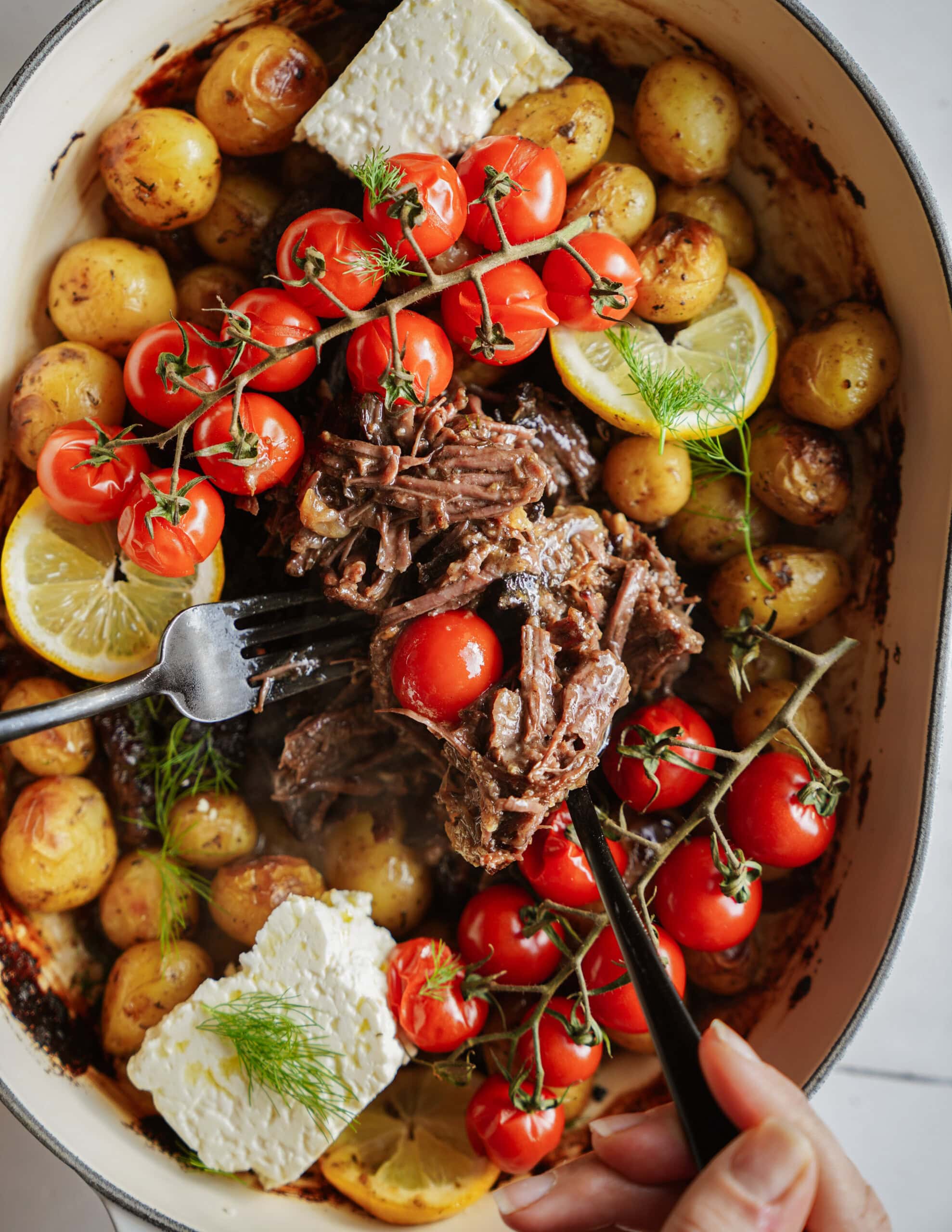
This Greek Braised Chuck Roast cooks in a bright, Greek-inspired sauce with herbs, lemon, and rich pan juices for a cozy, deeply savory meal. Even better the next day, it’s a comforting, make-ahead-friendly dish perfect for family dinners or relaxed entertaining.
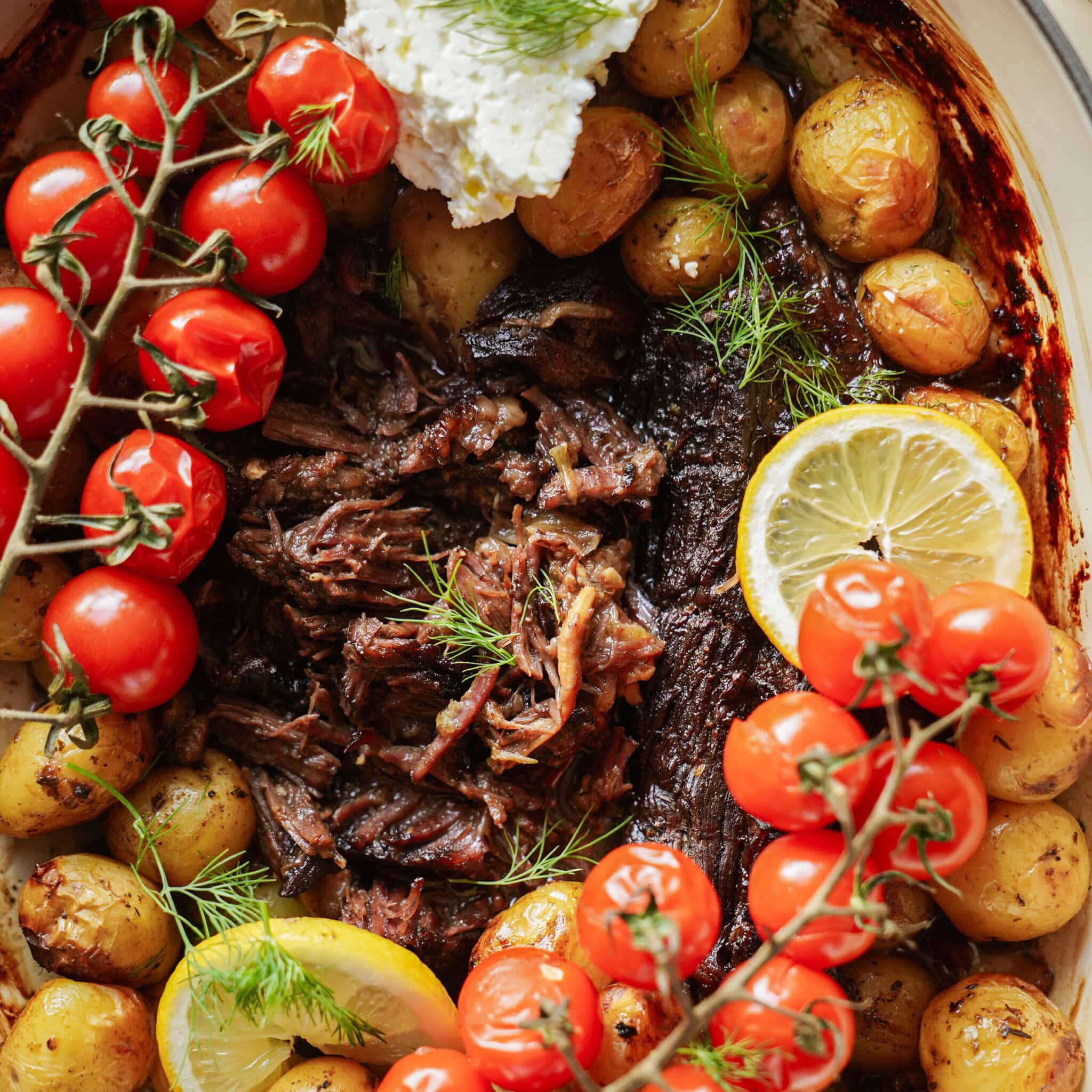
When people go looking for a Braised Chuck Roast recipe they’re usually craving something cozy, tender, and dependable. The kind of meat that fills the house with a delicious smell as it cooks and guarantees leftovers. However, classic pot roasts often turn out bland or a little flat, comforting but forgettable. This Greek-inspired version changes that! I’ve layered lemons, herbs, and savory pan juices into a slow braise that feels both familiar but with an exciting twist. Expect melt-in-your-mouth beef, cozy flavors that are perfect for the cooler weather, and a dish that somehow tastes just as good (if not better) the next day for leftovers.
Why Chuck Roast Is Ideal for Braising
Chuck roast is one of the best cuts of beef for braising because it’s built for low-and-slow cooking. It comes from the shoulder, which means the meat has lots of connective tissue and beautiful marbling running throughout. That marbling and collagen slowly melt as the roast cooks, turning what starts out as a firm, inexpensive cut into beef that’s rich, juicy, and fork-tender. Perfect for when you’re trying to cook a budget-friendly, but gourmet meal with little effort.
The beauty of chuck roasts is that the longer it cooks the better it gets. You don’t really have to worry about overcooking it like leaner cuts of meat. If your roast ever seems a little tough, don’t worry, it usually just needs more time in the oven or slow cooker.
Quick Tips
- Chuck roast starts tough but becomes tender through slow cooking.
- Marbling = flavor and juiciness
- Collagen melts into the sauce, making everything richer
- If it’s still firm, simply keep braising a little longer
What Makes This Braised Chuck Roast Greek-Style
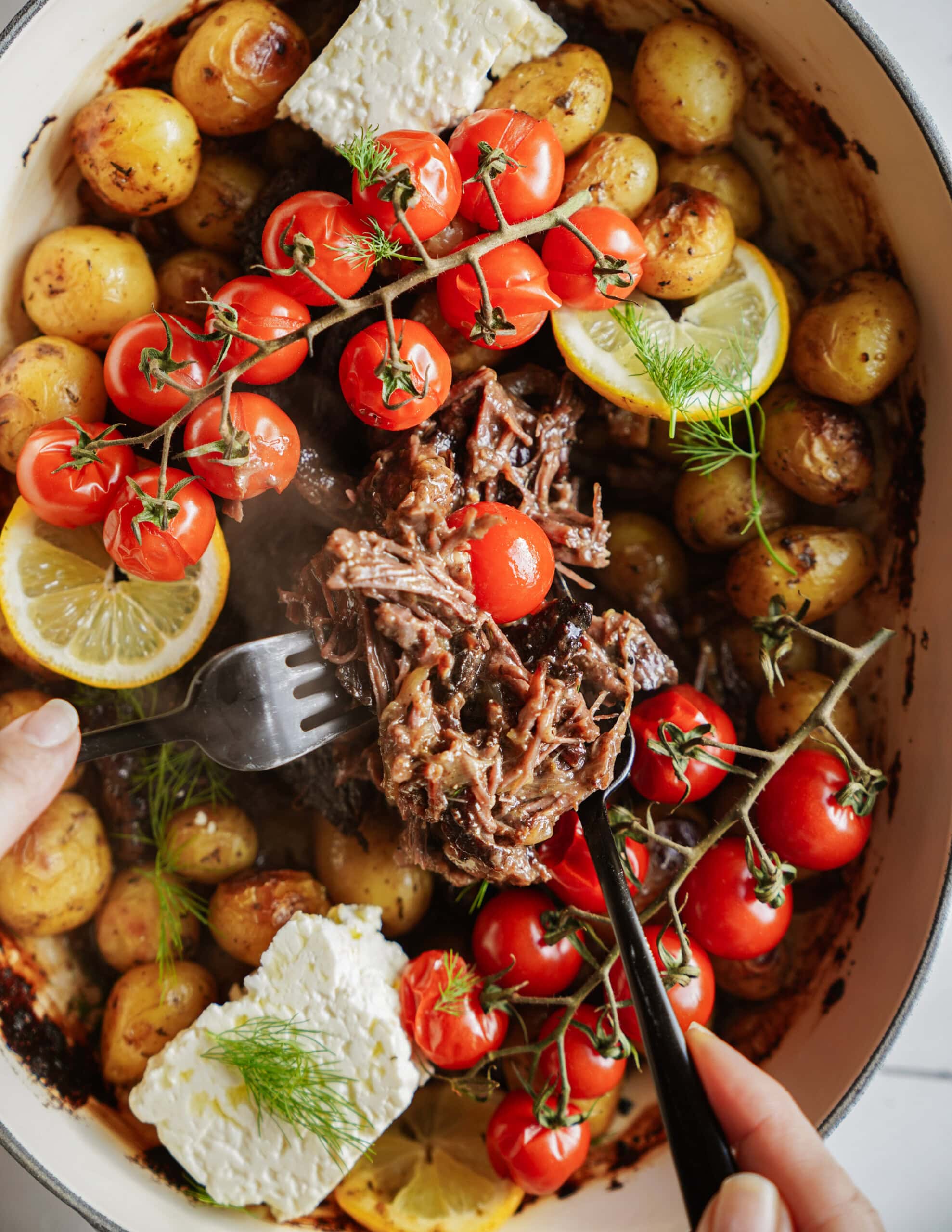
What sets this Braised Chuck Roast apart is its Greek-style flavor base, built around a tomato sauce layered with garlic, oregano, and a touch of warm spice. The approach draws inspiration from traditional Greek braises like kokkinisto and kapama, where meat slowly cooks in a rich, aromatic sauce until deeply tender. A splash of acidity from tomatoes and lemon brightens the dish and balances the richness of the beef far better than herb-only pot roasts. This combination of flavor gives a livelier, more complex flavor to your traditional roast.
Key Braising Principles
Browning Builds Flavor
Browning the roast before braising is the biggest flavor upgrade you can make to your chuck roast. As meat sears, it develops a golden crust and creates rich, savory notes which melt into the sauce as everything cooks together. The browned bits left in the pot dissolve into the braising liquid, giving the sauce depth and complexity. Skipping this step is one of the main reasons home braises taste flat.
Braising vs. Boiling
A true braise isn’t about drowning the meat in liquid. Instead, the roast should be only partially submerged, with some of it sitting above the liquid as it cooks. This allows the meat to both braise and gently roast at the same time, concentrating flavor rather than watering it down. Too much liquid dilutes the sauce and can leave the meat tasting less beefy while also affecting texture, preventing the sauce from thickening as it cooks.
Low and Slow = Tender
Tender braised beef doesn’t come from high heat, it comes from patience. A steady, moderate oven temperature gives the connective tissue time to slowly break down, turning tough collagen into silky richness that makes the meat fork-tender. Trying to rush the process with higher heat often leads to meat that tightens up instead of relaxing.
Ingredient & Flavor Notes
- Chuck Roast Chuck roast is very forgiving, so a slightly smaller or larger roast will still braise beautifully. Just aim for a well-marbled cut so it becomes tender and flavorful as it cooks.
- Tomatoes for Body and Balance Tomatoes give the sauce structure while adding gentle acidity that keeps the rich beef from tasting heavy, creating a balanced, spoonable sauce.
- Wine for Depth Wine is used to deglaze the pot and add complexity, but the dish still turns out delicious if you prefer to skip it. You can always use extra tomato, lemon juice or a splash of vinegar added towards the end for some brightness.
- Aromatics Build the Flavor Base Onion or shallot, garlic, bay leaf, and oregano slowly infuse the sauce as the roast cooks, creating the savory backbone of the dish.
- Vegetables Potatoes, carrots, or tomatoes can be added to make a full one-pot meal, but they’re optional. The braised beef and sauce are satisfying on their own with a fresh side.
What to Serve with Greek Braised Chuck Roast
- Easy & Authentic Greek Salad Recipe
- Italian Chopped Salad
- Easy Green Bean Salad
- Roasted Garlic Mashed Potatoes
- Greek Potato Recipes
Make-Ahead, Storage & Reheating Notes
- Make-Ahead Braised Chuck Roast is an excellent make-ahead meal because the flavors continue to develop as it rests. Cooking it a day in advance often makes the sauce richer and the beef even more flavorful, making it perfect for entertaining or meal prep.
- Storage Store leftover beef and sauce together in an airtight container in the fridge for up to 4 days. Keeping the meat in the sauce helps prevent it from drying out.
- Freezing Leftovers The braise/sauce freezes very well. Let everything cool, then freeze portions with plenty of sauce for up to 3 months. Thaw overnight in the fridge before reheating.
- Best Way to Reheat Reheat gently on the stovetop or in the oven, covered, with a splash of broth or water if the sauce has thickened too much. Slow reheating keeps the beef tender and prevents it from drying out.
- Leftovers Leftover braised beef is SO good in wraps, over rice or pasta, made into sandwiches, or even in a nice bowl.
Common Braised Chuck Roast Mistakes(and How to Fix)
- Skipping the browning step The problem: The final dish tastes flat or one-dimensional. The fix: Always sear the roast well before braising. Browning creates the deep savory flavors that carry through the entire sauce.
- Using a lean cut of beef The problem: Meat turns out dry or firm even after long cooking. The fix: Choose a well-marbled chuck roast. Fat and connective tissue are what make braised beef tender and flavorful.
- Pulling the roast out too early The problem: Beef feels tough or chewy. The fix: If it isn’t fork-tender, it simply needs more time. Keep braising until the connective tissue fully breaks down.
- Cooking at too high a temperature The problem: Meat tightens up and sauce reduces too quickly. The fix: Maintain gentle, steady heat. Low, slow cooking allows collagen to melt without drying out the meat.
- Expecting fast results from a braise The problem: Rushing the process leads to disappointing texture and flavor. The fix: Plan ahead and give the roast time to work its magic.
- Using too much liquid The problem: Sauce tastes diluted and meat lacks depth. The fix: Keep the roast only partially submerged so flavors concentrate as it cooks.
- Under-seasoning the braise The problem: Sauce tastes bland even though cooking time was correct. The fix: Season in layers. The meat, the aromatics, and taste the sauce before serving to adjust salt and acidity.
Chuck roast is one of the best cuts for braising because it has enough marbling and connective tissue to become tender and flavorful when cooking it for a long time at a low temperature.
Most chuck roasts become fork-tender after about 3-3.5 hours of braising at a low oven temperature. Exact timing varies based on size and thickness, but if the meat still feels firm, cook it longer.
The Greek-style flavor comes from a tomato-forward sauce combined with garlic, oregano, lemon, and warm spices, inspired by traditional Greek braised dishes where meat slowly cooks in a richly seasoned sauce.
Yes, and it’s often even better the next day. Making it ahead allows the flavors to deepen, making it ideal for meal prep or entertaining.
Absolutely. Wine adds depth, but you can replace that brightness with extra tomato, lemon juice, or a small splash of vinegar so the sauce still has balance.
Store leftovers in an airtight container with plenty of sauce in the fridge for up to 4 days, or freeze for longer storage. Reheat gently on the stovetop or in the oven, adding a splash of broth or water if needed to loosen the sauce and keep the beef tender.
Braised Chuck Roast
Ingredients1x2x3x
- 2.5-3 lbs boneless beef chuck roast
- kosher salt and ground pepper
- 1 tbsp extra-virgin olive oil
- 5 large garlic cloves, smashed
- 3-4 shallots, thinly sliced (about 2 cups sliced)
- 680 grams (1.5 lbs) whole baby potatoes
- ¼ cup white wine
- 1 tsp lemon zest
- 1 tsp dried oregano
- ½ tsp dried thyme
- 2 bay leaves
- ½ tsp ground pepper
- ½ tsp kosher salt
- ¼ cup lemon juice
- 3 cups chicken broth (or 3 tsp Better than Bouillon Chicken Base with 3 cups water)
- 2 small vines of cherry tomatoes
For serving
- slices of lemon
- 4-6 pieces of feta cheese
- fresh chopped dill
- fresh chopped parsley
Instructions
- Preheat the oven to 325F.
- Pat the beef chuck roast dry with a paper towel. Season generously with kosher salt and ground pepper on all sides. https://www.foodbymaria.com/wp-content/uploads/2026/02/season-beef.mp4
- To an oven-safe dutch oven, add 1 tbsp extra-virgin olive oil over medium-high heat. When the oil is hot, sear the beef until golden brown on all sides, about 3-4 minutes per side. Remove the beef to a plate and set aside. https://www.foodbymaria.com/wp-content/uploads/2026/02/seer-beef.mp4
- Turn to medium heat and add the smashed garlic and sliced shallots. Cook, stirring occasionally, until the shallots are tender, about 5 minutes. https://www.foodbymaria.com/wp-content/uploads/2026/02/garlic.mp4
- Add the lemon zest, dried oregano, dried thyme, bay leaves, ground pepper and kosher salt. Cook and stir until fragrant, about 1 minute. https://www.foodbymaria.com/wp-content/uploads/2026/02/seasoning.mp4
- Add the wine to deglaze the pan, scraping any browned bits from the bottom of the pan and stirring / cooking until most of the wine has evaporated. https://www.foodbymaria.com/wp-content/uploads/2026/02/wine.mp4
- Then add the lemon juice and chicken broth and stir to combine. Nestle the seared beef into the pot along with any juices from the plate. Bring to a simmer and once simmering, turn off the heat and place the lid on the pot. https://www.foodbymaria.com/wp-content/uploads/2026/02/liquids-and-beef.mp4
- Braise for 2 hours and then remove from the oven. Remove the lid and place the potatoes around the chuck roast, cover the pot, and place back in the oven to braise for another hour. https://www.foodbymaria.com/wp-content/uploads/2026/02/add-pots.mp4
- At the 3 hour mark, remove the roast from the oven, remove the lid and raise the oven temperature to 425F.
- Place the roast back in the oven for 20 minutes. Remove after 20 minutes and add the cherry tomatoes on the vine, one on each side of the roast and cook for 10 more minutes.
- Remove the roast from the oven. The roast should be fork tender and the potatoes should be cooked through.
- Remove the bay leaves before pulling the beef into smaller pieces.
- Serve pieces of beef on a plate with lemon slices, cherry tomatoes, a few pieces of feta cheese and fresh dill and/or parsley for garnish. https://www.foodbymaria.com/wp-content/uploads/2026/02/finale.mp4
Notes
- If you don’t want to use wine, you can use a non-alcoholic wine or more chicken broth instead.
- If you like this recipe, try our French Onion Pot Roast
Nutrition
Post A CommentCancel reply
Viral Costco Chicken 🐔

Homemade Doner Kebab Recipe 🍢 (Viral)

Frozen Lemon Ginger Cubes 🍋

Arayes (Middle Eastern Meat-Stuffed Pita)
Braised Chuck Roast
Ingredients
- 2.5-3 lbs boneless beef chuck roast
- kosher salt and ground pepper
- 1 tbsp extra-virgin olive oil
- 5 large garlic cloves, smashed
- 3-4 shallots, thinly sliced (about 2 cups sliced)
- 680 grams (1.5 lbs) whole baby potatoes
- ¼ cup white wine
- 1 tsp lemon zest
- 1 tsp dried oregano
- ½ tsp dried thyme
- 2 bay leaves
- ½ tsp ground pepper
- ½ tsp kosher salt
- ¼ cup lemon juice
- 3 cups chicken broth (or 3 tsp Better than Bouillon Chicken Base with 3 cups water)
- 2 small vines of cherry tomatoes
For serving
- slices of lemon
- 4-6 pieces of feta cheese
- fresh chopped dill
- fresh chopped parsley
Instructions
- Preheat the oven to 325F.
- Pat the beef chuck roast dry with a paper towel. Season generously with kosher salt and ground pepper on all sides. https://www.foodbymaria.com/wp-content/uploads/2026/02/season-beef.mp4
- To an oven-safe dutch oven, add 1 tbsp extra-virgin olive oil over medium-high heat. When the oil is hot, sear the beef until golden brown on all sides, about 3-4 minutes per side. Remove the beef to a plate and set aside. https://www.foodbymaria.com/wp-content/uploads/2026/02/seer-beef.mp4
- Turn to medium heat and add the smashed garlic and sliced shallots. Cook, stirring occasionally, until the shallots are tender, about 5 minutes. https://www.foodbymaria.com/wp-content/uploads/2026/02/garlic.mp4
- Add the lemon zest, dried oregano, dried thyme, bay leaves, ground pepper and kosher salt. Cook and stir until fragrant, about 1 minute. https://www.foodbymaria.com/wp-content/uploads/2026/02/seasoning.mp4
- Add the wine to deglaze the pan, scraping any browned bits from the bottom of the pan and stirring / cooking until most of the wine has evaporated. https://www.foodbymaria.com/wp-content/uploads/2026/02/wine.mp4
- Then add the lemon juice and chicken broth and stir to combine. Nestle the seared beef into the pot along with any juices from the plate. Bring to a simmer and once simmering, turn off the heat and place the lid on the pot. https://www.foodbymaria.com/wp-content/uploads/2026/02/liquids-and-beef.mp4
- Braise for 2 hours and then remove from the oven. Remove the lid and place the potatoes around the chuck roast, cover the pot, and place back in the oven to braise for another hour. https://www.foodbymaria.com/wp-content/uploads/2026/02/add-pots.mp4
- At the 3 hour mark, remove the roast from the oven, remove the lid and raise the oven temperature to 425F.
- Place the roast back in the oven for 20 minutes. Remove after 20 minutes and add the cherry tomatoes on the vine, one on each side of the roast and cook for 10 more minutes.
- Remove the roast from the oven. The roast should be fork tender and the potatoes should be cooked through.
- Remove the bay leaves before pulling the beef into smaller pieces.
- Serve pieces of beef on a plate with lemon slices, cherry tomatoes, a few pieces of feta cheese and fresh dill and/or parsley for garnish. https://www.foodbymaria.com/wp-content/uploads/2026/02/finale.mp4
Notes
- If you don’t want to use wine, you can use a non-alcoholic wine or more chicken broth instead.
- If you like this recipe, try our French Onion Pot Roast
Nutrition
FoodbyMaria.com
